

Introduction: The Illusion of Online Success
From the outside, many online businesses look unstoppable.
- High traffic
- Strong revenue screenshots
- Growing social followings
- Public “wins”
But underneath the surface, a surprising number of these businesses are one change away from collapse.
An algorithm update.
A policy shift.
A payment processor freeze.
A platform ban.
And suddenly — revenue disappears.
This is the uncomfortable truth few people talk about:
👉 Many “successful” online businesses are fragile by design.
What Fragility Really Means in Online Business
A fragile business is not necessarily unprofitable.
It may even be growing.
Fragility means:
- One core dependency
- One dominant channel
- One key partner
- One fragile assumption
If that single point fails, the entire business struggles to survive.
The Biggest Sources of Fragility Online
Most fragile businesses suffer from at least one of these risks.
1. Platform Dependency Risk
If your business lives entirely on:
- TikTok
- Amazon
- Shopify apps
- One SaaS API
You don’t own the rules.
Platforms optimize for their incentives, not your survival.
Terms change.
Reach shifts.
Accounts get suspended.
And appeals often go unanswered.
2. Traffic Concentration Risk
Many businesses rely on:
- One keyword cluster
- One traffic source
- One viral content format
This creates artificial stability — until rankings drop or trends fade.
Healthy businesses expect volatility.
Fragile ones are surprised by it.
3. Revenue Concentration Risk
This is one of the most dangerous forms of fragility.
Examples:
- One client = 40% of revenue
- One affiliate partner
- One product line
- One pricing tier
When revenue isn’t diversified, negotiations become power imbalances.
And leverage shifts away from you.
4. Tool & Vendor Dependency
Your business stack matters more than most people think.
Fragile businesses:
- Rely on too many third-party tools
- Depend on automations they don’t understand
- Can’t operate manually if systems fail
When tools break, so does revenue.
The Algorithm Comfort Trap
Many online businesses grow during a “good period”:
- Favorable algorithms
- Low competition
- Cheap ads
- Early adoption
This creates false confidence.
Builders assume growth equals strength —
But strength only reveals itself during stress.
Why Fragile Businesses Still Look Successful
Because:
- Screenshots capture moments, not resilience
- Social proof hides risk
- Metrics reward growth, not durability
Fragility isn’t visible on dashboards.
It shows up during disruption.
The Difference Between Growth and Stability
Growth answers:
“How fast can this scale?”
Stability answers:
“How long can this survive under pressure?”
Online businesses that prioritize growth without resilience often peak early — then disappear quietly.
What Resilient Online Businesses Do Differently
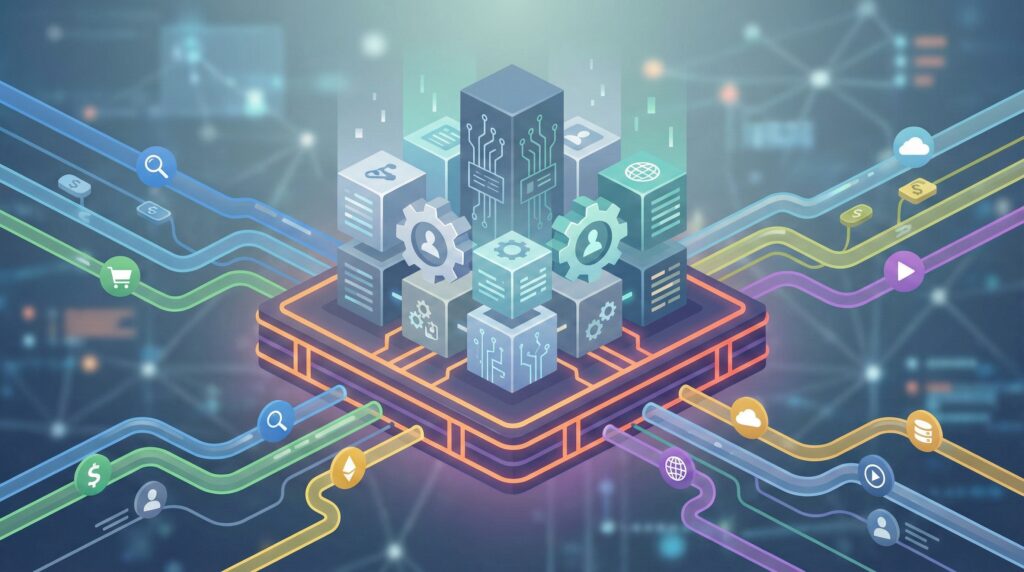
They design for failure, not perfection.
1. They Diversify Traffic by Default
Resilient businesses build:
- SEO
- Email lists
- Direct traffic
- Paid channels
- Partnerships
No single source exceeds a dangerous threshold.
2. They Create Revenue Redundancy
Instead of one offer, they have:
- Core products
- Upsells
- Services
- Subscriptions
- Backend monetization
If one stream dips, others compensate.
3. They Own the Customer Relationship
Emails.
Accounts.
Billing data.
Support history.
Ownership matters more than reach.
4. They Can Operate Manually if Needed
Resilient businesses:
- Understand their processes
- Can temporarily replace automation
- Aren’t helpless when systems fail
Complexity is managed — not blindly trusted.
Fragility and Exit Value
Buyers look for:
- Predictability
- Transferability
- Risk mitigation
A business that collapses without its founder, platform, or tool stack is worth far less — regardless of revenue.
Resilience increases valuation multiples.
Stress Testing Your Online Business
Ask yourself:
- What happens if traffic drops 30%?
- What if my top partner leaves?
- What if ads stop converting?
- What if my main tool shuts down?
If these questions cause panic, fragility exists.
Why Simpler Businesses Are Often Stronger
Complexity increases fragility.
Simple systems:
- Are easier to fix
- Are easier to sell
- Survive change better
Resilience doesn’t come from cleverness —
It comes from clarity.
The Long-Term Advantage of Anti-Fragility
The strongest businesses don’t just survive stress.
They improve because of it.
They:
- Learn faster
- Adapt earlier
- Outlast competitors
- Absorb market shifts
While fragile businesses disappear, resilient ones quietly consolidate the market.
Final Thought: Stability Is the New Growth Hack
The internet rewards speed —
But wealth rewards survival.
If you’re building something meant to last:
- Design for disruption
- Assume platforms will change
- Expect volatility
- Reduce single points of failure
Because in the long run, the businesses that win aren’t the flashiest.
They’re the ones still standing.