

Introduction
Traffic is the fuel of every online business — but not all traffic builds assets.
Some traffic disappears the moment you stop paying.
Other traffic compounds long after the work is done.
This article compares SEO vs paid ads from a business-building perspective, not a marketer’s one — and explains when each makes sense.
The Core Difference Between SEO and Paid Ads
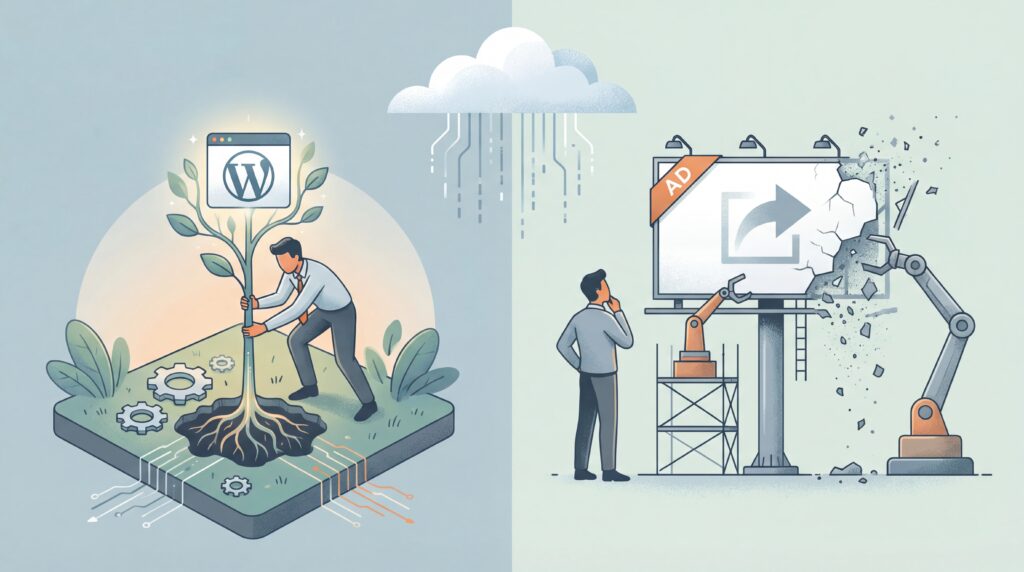
Paid ads:
- Rent attention
- Scale fast
- Stop instantly
SEO:
- Owns attention
- Scales slowly
- Compounds over time
Neither is “better” — but they serve very different goals.
When Paid Ads Make Sense
Paid ads work best when:
- You already have product-market fit
- You know your conversion metrics
- You have backend monetization
Best use cases:
- Ecommerce
- Lead generation
- Validated funnels
Ads amplify systems — they don’t fix broken ones.
When SEO Makes Sense
SEO is ideal when:
- You want long-term traffic
- You’re building authority
- You want lower acquisition costs over time
SEO shines for:
- Content businesses
- Affiliate sites
- SaaS
- Education
SEO builds assets, not just clicks.
The Cost Reality Most People Ignore
Paid ads cost money forever.
SEO costs time up front.
In the long run:
- Ads = ongoing expense
- SEO = declining marginal cost
Businesses that survive platform changes usually own SEO traffic.
The Best Strategy: Use Both (In Order)
Smart businesses:
- Start with SEO to build authority and data
- Use ads later to scale proven offers
- Retarget SEO traffic with paid ads
This creates leverage and resilience.
Common Mistakes
- Running ads with no backend
- Expecting SEO results in 30 days
- Choosing one channel ideologically
Traffic sources are tools, not identities.
Final Verdict
If you want speed → ads
If you want durability → SEO
If you want a real business → combine them strategically